
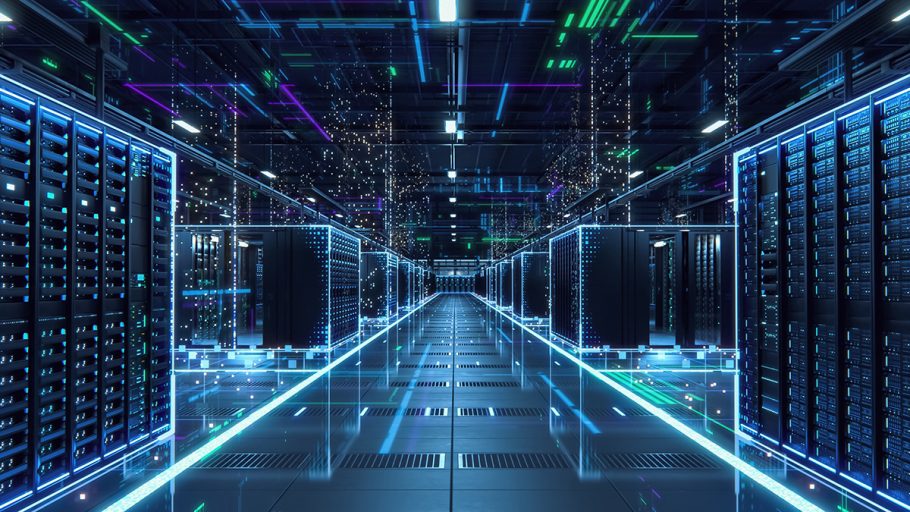
The $7 Trillion AI Infrastructure Race: Data Centers, Energy, and Who’s Winning
Industry leaders now estimate that planned AI data center expansions could require up to $7 trillion in investment over the next several years. That figure — staggering even by the standards of the AI boom — captures a fundamental shift: the bottleneck in AI is no longer software or models. It’s physical infrastructure. Chips, energy, cooling, land, and the people who build and run it all.
This is the story of the most capital-intensive arms race in tech history, who the major players are, and what it means if you’re building products on top of AI.
Why infrastructure has become the moat
For most of software’s history, the advantage went to whoever had the best algorithm or the best product. Infrastructure was table stakes — something you rented from AWS or Google Cloud at predictable prices. AI has broken that assumption.
Training and running frontier models at scale requires:
- Tens of thousands of specialized GPUs (primarily Nvidia H100s and the newer Blackwell series)
- Gigawatts of reliable, low-latency power
- Advanced cooling systems — some facilities are now experimenting with liquid immersion cooling
- Physical real estate that can support massive electrical loads
- Fiber and networking infrastructure with very low latency to end users
None of this can be conjured quickly. Lead times on power infrastructure alone run 3–5 years. That means the companies investing now are locking in advantages that will compound for the rest of the decade.
The major players and their bets
Microsoft committed to investing approximately $10 billion in Japan alone between 2026 and 2029, framing it explicitly as AI infrastructure combined with national cybersecurity cooperation. Globally, Microsoft is on track to spend tens of billions across dozens of countries.
Meta is expanding data centers aggressively, including facilities powered by natural gas — a reminder that the energy demands of AI are colliding with climate commitments in ways that will require hard policy choices.
xAI (Elon Musk’s AI lab) has been building what it calls a “Gigafactory of compute” in Memphis, Tennessee — a facility that, when complete, could be among the largest concentrations of GPU compute in the world.
Nvidia sits at the center of all of this, supplying the GPUs that every data center needs. Cisco’s CEO has argued publicly that the compute shortage is real and durable, and that the AI infrastructure build-out may still be in its early phase.
Oracle is investing heavily in AI infrastructure even as it cuts headcount in other areas — a pattern showing up across large enterprise tech companies: trim the payroll, double down on the compute.
Energy is the real constraint
The hidden story inside the $7 trillion figure is energy. A single large AI training run can consume as much electricity as thousands of homes use in a year. Data centers already account for a significant fraction of global electricity consumption, and that share is growing rapidly.
This is creating real friction:
- Grid capacity in many US regions is strained, with utilities warning of multi-year waits for new industrial power connections.
- Community resistance is emerging — neighborhoods near planned data centers are pushing back on noise, water usage (for cooling), and local grid impact.
- Nuclear is making a comeback — Microsoft’s deal with Constellation Energy to restart Three Mile Island’s Unit 1 reactor is a direct response to data center power demands. Other labs are exploring small modular reactors.
- Renewable buildout is accelerating but still insufficient — solar and wind capacity additions are at record levels, but intermittency remains a challenge for always-on compute loads.
What this means for developers and indie builders
The $7 trillion infrastructure race might seem like a story about billionaires and governments, but it has direct consequences for anyone who builds software:
- API pricing will fluctuate — compute costs are the dominant cost driver for AI API providers. As infrastructure scales, prices may drop. But supply constraints can push them up. Expect volatility, and design your product to be cost-resilient.
- Latency geography matters more — as AI inference gets embedded in real-time products, where data centers are physically located starts to affect product quality. Edge inference (running models closer to users) is a growing area.
- Open-source as a hedge — running your own models on rented compute becomes more attractive as frontier API costs shift. Smaller, fine-tuned models for specific tasks are increasingly competitive with expensive frontier calls.
- Reliability assumptions — the bigger the infrastructure dependency, the bigger the blast radius when something goes wrong. Design for graceful degradation.
The geopolitical layer
AI infrastructure is no longer just a business story — it’s a national security story. Governments are treating data centers and chip supply chains the way they once treated oil refineries and steel mills: as strategic assets that need domestic control or trusted-ally sourcing.
The US CHIPS Act, export controls on advanced semiconductors to China, and Microsoft’s framing of its Japan investment as “digital sovereignty” infrastructure are all part of the same picture. The AI infrastructure race is becoming part of great-power competition, and that will shape regulation, procurement, and international tech partnerships for decades.
Final thoughts
The $7 trillion AI infrastructure race is reshaping the physical and geopolitical map of the internet. Software defined the last two decades of tech. Infrastructure — real, physical, power-hungry infrastructure — may define the next two. For builders and developers, the practical takeaway is clear: understand your dependencies, design for resilience, and pay attention to who controls the compute your products run on.
The model you use today is only as reliable as the infrastructure behind it.