
SpaceX Is Heading for an IPO — And It Could Rewrite Market History
SpaceX has reportedly filed for what could become the largest IPO in market history. Reports from major financial outlets in early April 2026 suggest the company is positioning for a public offering that would dwarf previous records — including Saudi Aramco’s 2019 listing. For a company that Elon Musk long insisted would stay private, this is a significant shift. For markets, it would be a defining event. For the broader space economy, it changes everything about who can participate.
Here’s what you need to know about where SpaceX stands, what the space economy looks like in 2026, and what a potential IPO would mean.
Where SpaceX is in 2026
SpaceX has achieved things in the last five years that were widely considered impossible by the broader aerospace industry:
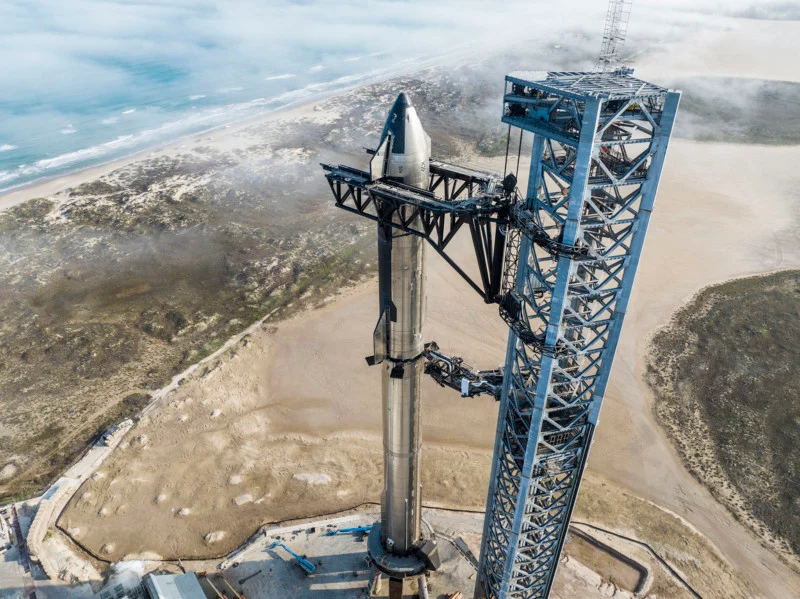
- Starship — the largest rocket ever built — has successfully completed orbital test flights after a difficult development program. The fully reusable architecture, if it delivers on its promise at scale, reduces the cost to orbit by an order of magnitude.
- Starlink has become a real business with millions of subscribers globally, providing satellite internet to ships, aircraft, rural areas, and increasingly urban markets where it competes directly with traditional ISPs. It is reportedly the main revenue engine making SpaceX cash-flow positive.
- Launch dominance — SpaceX now handles a majority of all orbital launches globally. Its Falcon 9 booster reusability has been proven across hundreds of flights.
- Government contracts — NASA’s Artemis program (the crewed lunar missions), US military satellite launches, and defense contracts provide a steady, high-margin revenue base.
Why an IPO now?
Several factors may be pushing toward a public offering:
- Starlink scale requires capital — expanding the constellation to tens of thousands of satellites and building out ground infrastructure is enormously capital-intensive. Public markets offer a much larger pool of capital than private rounds.
- Early investors and employees want liquidity — SpaceX has been private for over 20 years. Employees and early-stage investors have been waiting a long time to realize returns.
- The moment is favorable — with Starlink as a profitable revenue anchor and Starship progressing, this may be the optimal window to go public before the uncertainty of the next Starship development phase.
- Competitive pressure — Amazon’s Project Kuiper (a direct Starlink competitor) is launching satellites at scale. A public SpaceX can respond faster with access to capital markets.
The broader space economy in 2026
SpaceX’s story is the headline, but the space economy in 2026 is much broader:
NASA’s Artemis program successfully launched Artemis II in April 2026 — the first crewed lunar flyby since Apollo 17, sending four astronauts around the Moon and back. This is a critical milestone for the long-term goal of establishing a sustained human presence on the Moon as a stepping stone to Mars.
Commercial space stations — Axiom Space and others are developing commercial successors to the ISS, which is scheduled for deorbit later this decade. SpaceX is central to crew transportation for all of these.
Earth observation — a new generation of commercial satellites is providing increasingly detailed, frequent imaging of the Earth’s surface, powering applications in agriculture, logistics, disaster response, climate monitoring, and military intelligence.
In-space manufacturing — early experiments in manufacturing in microgravity (pharmaceuticals, fiber optics, semiconductor materials with unique properties only achievable in space) are moving from research to early commercial operation.
What a SpaceX IPO would mean for markets
If SpaceX goes public at a valuation that analysts have estimated in the range of $200–350 billion, it would:
- Be among the largest IPOs ever recorded — in terms of market cap at listing, it would rival or exceed previous records.
- Trigger massive index inclusion — a company of this size would be included in major stock indices, forcing index funds to buy shares, which creates structural buying pressure.
- Democratize access — right now, SpaceX equity is only available to accredited investors via private secondary markets. An IPO lets anyone with a brokerage account participate.
- Catalyze the broader space sector — a successful SpaceX IPO would likely raise the profile and valuations of other space companies, potentially making it easier for smaller players to raise capital.
What to consider if you’re interested as an investor
This is not financial advice — but here are the honest factors to weigh:
Strengths: Dominant market position in launch, growing and profitable Starlink revenue, massive total addressable market, unique technological capabilities, long government contract pipeline.
Risks: Regulatory exposure (Elon Musk’s other activities create political risk), the capital intensity of Starship development, Starlink faces real competition from Kuiper, execution risk on the Mars vision that shareholders may not share, and the inherent complexity of valuing a company with this many diversified revenue streams at this scale.
Long-term lens: The space economy is a genuine multi-trillion-dollar long-run opportunity. The question is whether SpaceX’s current valuation already prices in a substantial portion of that opportunity, or whether there’s still significant upside from here.
Final thoughts
SpaceX going public would be one of the defining market events of the decade. It’s not just a stock listing — it’s a signal about where capital is flowing, which industries have generational tailwinds, and how the infrastructure of the next century will be built. Even if you have no interest in investing, the space economy is reshaping communications, defense, climate monitoring, and eventually where humans live and work.
Pay attention to this story. The next chapter is just beginning.